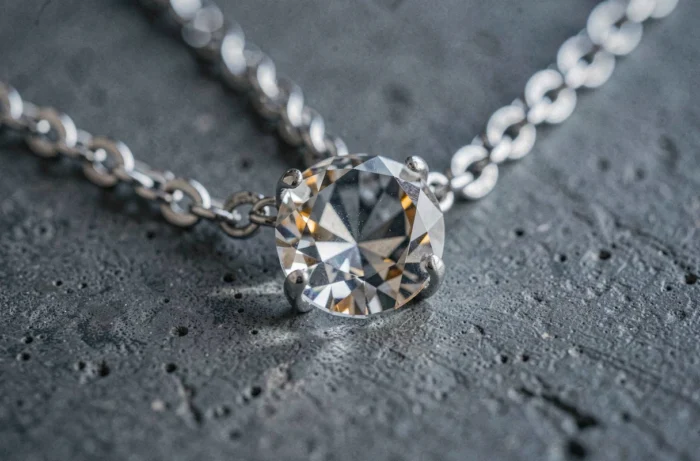
Swarovski crystals are lead glass cut with industrial precision, not gemstones. This technical distinction affects both their durability and the warranty conditions applied by the brand. Understanding what Swarovski actually covers, and what falls under normal wear, allows for a long-term evaluation of the value of a purchase.
Lead Crystal and Mechanical Resistance: What the Composition Implies
Swarovski crystal contains a significant proportion of lead oxide, which gives it its characteristic brilliance and ability to diffract light. This composition makes it shinier than ordinary glass, but also more sensitive to scratches and impacts than a natural stone like quartz or sapphire.
The surface treatments applied by Swarovski (Aurora Borealis coatings, metallic effects) add a decorative layer that wears off over time. Repeated contact with sweat, cosmetics, or perfumes accelerates this degradation. The metal parts of the jewelry, often rhodium or gold plated, undergo the same type of gradual wear.
An in-depth article on the warranty and durability of Swarovski jewelry details the alteration mechanisms specific to these crystals and the precautions to take to prolong their shine.
Swarovski Warranty: Variable Durations Depending on Product Range
Swarovski does not apply a single warranty to its entire catalog. The brand distinguishes two categories with very different coverage.
Classic Crystal Jewelry
Necklaces, bracelets, rings, and earrings made of standard crystal only benefit from the legal warranty in effect in the country of purchase. In France, this corresponds to the legal warranty of conformity. Swarovski does not offer an extended commercial warranty on these products.
Swarovski Created Diamonds
The Created Diamonds range, positioned in a higher segment, benefits from distinct treatment. Swarovski grants 3 years of warranty on standard pieces and 5 years on custom pieces. This difference reflects the pricing positioning and the different composition of these pieces, which use synthetic diamonds rather than lead crystal.
Common Conditions
- The warranty only applies to products purchased in Swarovski stores (physical or online) or from an authorized retailer. A purchase on a resale platform or in an unauthorized store voids the coverage.
- The original proof of purchase is required for any warranty claim.
- Normal wear, damage caused by improper maintenance, or unauthorized modifications are excluded from the warranty.
Normal Wear and Manufacturing Defects: The Blurred Line
The majority of customer complaints visible on review platforms concern issues that Swarovski classifies as normal wear. Stones coming loose after a few months, tarnished plating, clasps that break: these situations fuel recurring frustration.
The difficulty lies in distinguishing between a manufacturing defect, covered by the warranty, and degradation related to daily use. Swarovski considers the loss of shine of the plating as normal wear, even if it occurs quickly. For the consumer, a piece of jewelry that loses its appearance within a few months after a high-priced purchase resembles a defect, not predictable wear.
Feedback published on Trustpilot and Custplace shows a low average rating for the brand in France, with recurring criticisms about perceived quality and customer service responsiveness. Positive reviews generally mention the design and initial aesthetics, rarely the longevity.
Care for Swarovski Jewelry: Actions That Extend Lifespan
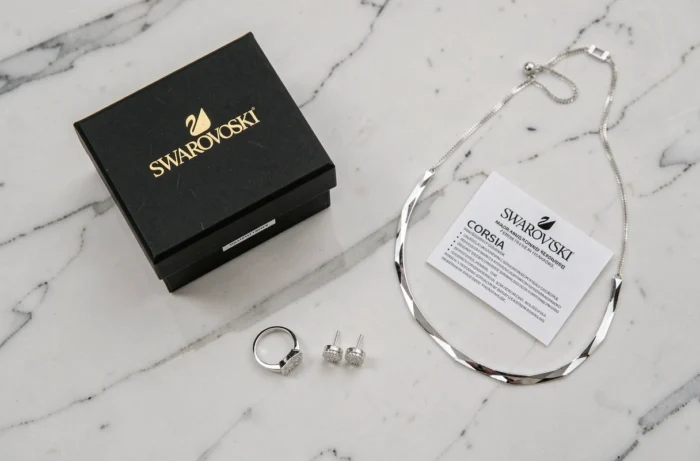
Some specific precautions for Swarovski crystal and its surface treatments can help limit premature wear.
- Apply perfume, cream, and hairspray before putting on the jewelry, never after. The chemical components of these products attack the metallic coatings and surface treatments of the crystal.
- Clean the pieces with a soft, slightly damp cloth, without any chemical products or ultrasonic cleaners. Lead crystal is more porous than regular glass.
- Store each piece separately, ideally in its original pouch, to avoid friction between pieces that can scratch treated surfaces.
- Remove jewelry before any activity involving water (swimming pool, shower, dishwashing). Chlorine and detergents accelerate the degradation of the plating.
These actions do not turn a crystal piece into an eternal piece of jewelry. They delay the moment when signs of wear become visible, which can represent the difference between a few months and several years of regular wear.
Value for Money of Swarovski Jewelry: Crystal vs. Alternatives
The price of a Swarovski piece of jewelry falls within a mid-range, above costume jewelry but below natural stone jewelry. The question of value thus arises in terms of durability relative to the price paid.
A Swarovski crystal bracelet costs significantly more than a generic brand costume jewelry piece, but its lifespan, without rigorous maintenance, can prove comparable. The initial brilliance and quality of the cut justify part of the price, but the plating remains the weak link in the chain, regardless of the care taken.
The Created Diamonds range changes this equation. The extended warranty, more durable composition, and the brand’s commitment to sustainable jewelry offer a better ratio of investment to longevity. For a purchase intended to last, this range deserves to be prioritized over classic crystal lines.
The choice of a Swarovski piece remains relevant for its aesthetics and the precision of its cut, provided one accepts that it is a decorative product subject to visible wear over time. Checking that the point of sale is authorized by the brand remains the first reflex to have before any purchase.