You settle the bill in a small restaurant in Fes, and the waiter gives you your change down to the last cent. Should you leave some coins on the table? How much? Tipping in Morocco is not listed on any receipt, but it is part of daily life. Understanding who expects it, in what context, and for what amount helps avoid both embarrassment and misunderstanding.
Bakchich and tipping in Morocco: two logics to distinguish
The word “bakchich” often appears in travel guides, sometimes used as a synonym for tip. The two concepts intersect without being confused. Bakchich originally refers to an informal gratuity, sometimes solicited insistently by someone providing (or offering) an unsolicited service: a passerby who “guides” you in the medina, a self-proclaimed parking attendant.
The tip, on the other hand, rewards a real and identified service: at a restaurant, in a riad, with an official guide. Tipping is never mandatory, but it is greatly appreciated, as many jobs related to tourism partially rely on this additional income.
To better understand tipping practices in Morocco, keep this distinction in mind: giving a few dirhams to an attentive waiter is a matter of courtesy, while yielding to pressure in a souk involves a different dynamic.
Tip amounts in restaurants and cafes
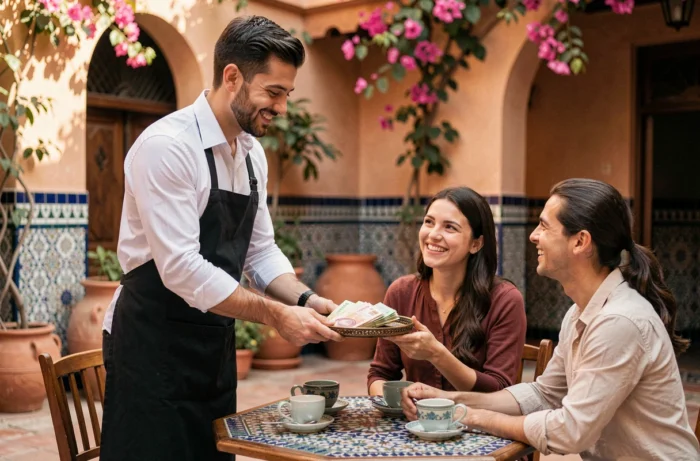
This is the most common situation for a traveler. In a neighborhood café, after a mint tea or a freshly squeezed orange juice, leaving a few coins is sufficient. No one expects a calculated percentage gesture.
In a mid-range restaurant, the common practice is to add a small amount to the bill. The bill generally does not include service charges, unlike what is done in some European countries. The gesture remains voluntary and proportional to the quality of the meal.
In higher-end restaurants, particularly in Marrakech or Casablanca, the tip can be a bit more generous. Nothing extravagant: the idea is to thank for attentive service, not to compensate for a salary. Keep small denominations in dirhams; it’s more convenient than asking for change.
Tipping for guides, drivers, and tour companions
Are you going on a desert excursion or a multi-day tour? The question of tipping arises differently because the relationship with the guide or driver extends over time.
Official tour guides
An accredited guide who accompanies you for a day in the medina of Fes or at the sites of Volubilis provides work in popularization, logistics, and sometimes negotiation. The tip is given at the end of the service, in person. The amount depends on the duration and quality of the interaction. For a half-day, a few tens of dirhams is a appreciated gesture.
Private drivers and organized tours
On a multi-day tour (desert, Atlas, Atlantic coast), the driver shares your daily life. They drive, manage unexpected events, and suggest stops. The tip is given at the end of the stay, separately from that of the guide if the two roles are distinct. Both the guide and the driver receive their tip, even if they work together.
Tipping in riads, hotels, and accommodations in Morocco
Accommodation is another area where tipping naturally comes into play. Several people may be involved during your stay:
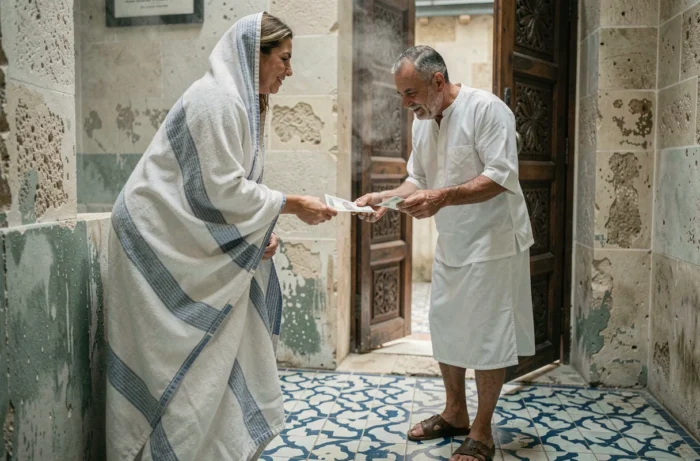
- The porter upon arrival, especially in riads located in the medina where luggage is transported on foot through narrow alleys. A few dirhams handed directly is sufficient.
- The housekeeping staff, whom you rarely see but who maintain your room every day. Leaving a tip at the end of the stay is common, placed on the nightstand or handed to the reception.
- The cook of a small family riad, when meals are prepared on-site. This gesture is less systematic but always well received.
In large hotels in Marrakech or Agadir, the system is more standardized. Some establishments centralize tips and redistribute them to the staff. If you want to reward a particular person, give it to them directly.
Tipping outside tourist circuits: what changes
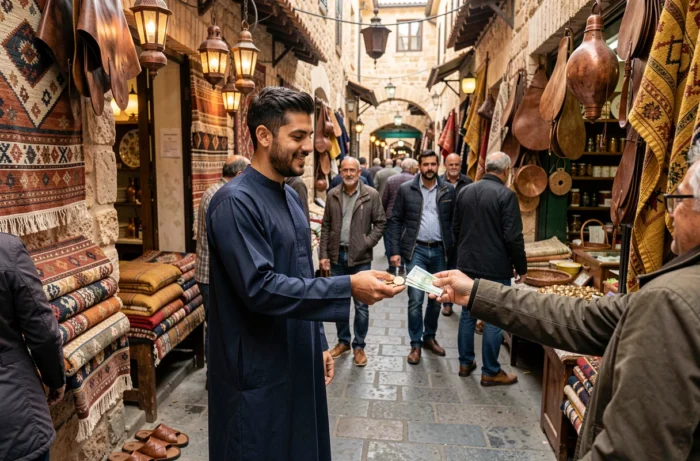
Far from Marrakech, Fes, or heavily frequented areas, practices evolve. In small towns or villages in the Atlas, tipping is still appreciated, but the expected amounts are naturally lower. A tea offered, a shared meal: reciprocity also comes through something other than money.
Some specific situations deserve attention:
- Parking attendants (often recognizable by their vests): a few coins upon return is the norm in almost all Moroccan cities.
- Gas station attendants: a small tip after a fill-up and windshield cleaning is common.
- Muleteers or porters during hikes (Toubkal, Berber valleys): their physical work justifies a tip at the end of the trek, handed in person.
Always having coins and small denominations in dirhams helps avoid being stuck with a bill that is too large for the situation. ATMs often dispense 200 dirham bills, so remember to make change at the market or in a shop.
Tipping in Morocco reflects an exchange, not a transaction. Giving an appropriate amount for the service, without excess or embarrassment, shows that you understand the local code. No one will judge you for a dirham more or less; what matters is the gesture and the manner.