Fashion in France is undergoing a period of rapid reorganization. Shopping channels are shifting, European regulations on textiles are tightening, and the autumn-winter fashion shows are setting the tone for the months to come. Here’s an overview of the latest fashion trends, between stylistic innovations and structural changes in the market.
Second-hand and ultra fast fashion: the clothing market is fracturing
The highlight of this season is not seen on the runways but in the consumption figures. Second-hand and ultra fast fashion account for a quarter of clothing purchases by value in France, according to a data synthesis from the Institut Français de la Mode reported by the Gazette des commerçants in August 2026.
Second-hand alone represents more than 11% of clothing consumption. Among 18-24 year-olds, this channel accounts for nearly one in five purchases. It is no longer a niche behavior reserved for vintage enthusiasts.
The 25-34 age group confirms this shift: more than half of them purchased at least one item of fashion labeled as “responsible” in 2024, and nearly three-quarters bought second-hand at least once during the year. Specifically, following the news on boulevardmode.fr allows us to measure how these new shopping behaviors are reshaping trends season after season.
This polarization between second-hand and ultra fast fashion is compressing the mid-range. Brands positioned between the two struggle to justify their prices without arguments for sustainability or traceable manufacturing.
Textile regulation in Europe: what the REP directive changes for fashion
The European regulatory framework is an often-underestimated lever for transformation by consumers. The revision of the Waste Framework Directive now incorporates an extended producer responsibility (REP) specific to textiles.
The principle is simple: brands that market clothing in the European market will have to finance the collection, sorting, and recycling of these products at the end of their life. Several European countries are working on the national transposition of this directive.
In France, a penalty system directly targets fast fashion. Products with rapid turnover and low durability will incur increased eco-contributions. This mechanism aims to raise the real cost of the least durable clothing, which could ultimately change the visible offer online and in stores.
The available data does not yet allow us to measure the impact of these penalties on retail prices. However, several brands have begun to incorporate refurbished capsules or take-back programs into their offerings, anticipating regulatory constraints.
Autumn-winter style trends: colors, cuts, and pieces to watch
The autumn-winter Fashion Week shows are steering wardrobes in a few clear directions. Black remains a staple, but earthy colors and saturated tones (burgundy, forest green, navy blue) are gaining ground over the pastel palettes of previous seasons.
In terms of cuts, three main trends emerge from recent collections:
- Structured silhouettes are making a strong comeback, with pronounced shoulders on jackets and coats, breaking away from the oversized wardrobe that has dominated for several seasons
- The long dress in knit or jersey is establishing itself as a transitional autumn-winter piece, worn alone or layered over a turtleneck
- Soft leather is gradually replacing rigid leather, both in pants and jackets, with matte finishes rather than glossy ones
The street style captured during the latest Fashion Weeks confirms these trends. The most photographed looks combine structured pieces with a single contrasting element (a bright color, a voluminous accessory), far from maximal accumulation.
The return of natural materials in women’s wardrobes
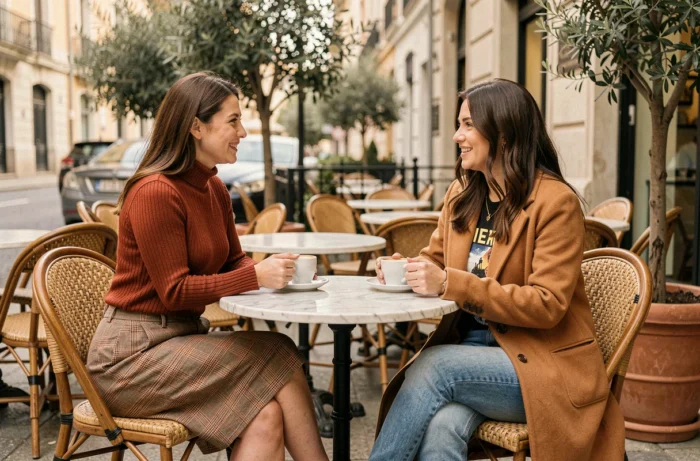
Wool, cashmere, thick linen: natural materials are regaining a central place in women’s collections. This movement is not solely aesthetic. It responds to dual pressure: consumer demand for more durable clothing, and anticipation of European standards on textile traceability.
Brands that communicate about the origin of their fibers (country of production, type of spinning) see higher engagement online. The “digital product passport,” as provided for by European regulation, is expected to standardize this information in the long term.
Tips for adapting your wardrobe to new fashion trends
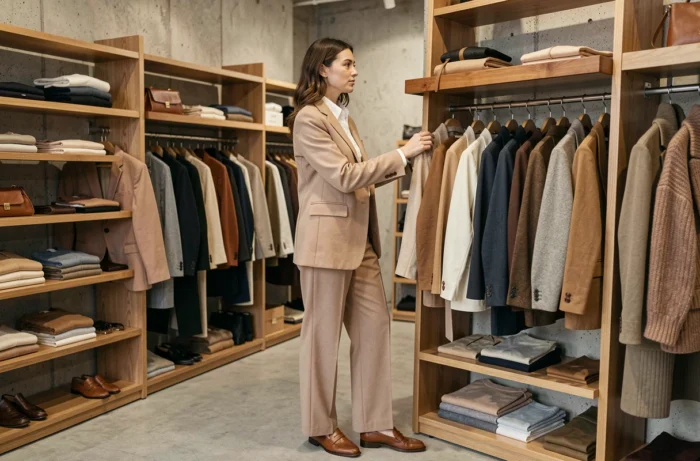
Rather than completely renewing your wardrobe, the current logic invites targeted adjustments. The first lever is to identify pieces already present in your wardrobe that align with the season’s trends: a straight wool pant, a structured coat, a knit dress can be enough to anchor a look in the current stylistic line.
Investing in one or two quality pieces per season rather than ten impulsive purchases remains the most coherent advice with the current state of the market. The rise of second-hand offers a concrete alternative for acquiring high-end pieces at reduced prices.
- Favor neutral or dark colors for structured pieces (jacket, coat, pants), which can last through several seasons without appearing dated
- Reserve the most pronounced trends (bright color, experimental cut) for accessories or everyday pieces with low unit costs
- Check the composition of clothing before purchase: a high percentage of natural fibers improves longevity and facilitates future recycling
The fashion of this autumn 2026 can be read on two levels. On the surface, style trends are evolving towards more structure and chromatic sobriety. At a deeper level, shopping channels and regulatory constraints are reshaping what will be offered, at what price, and with what guarantees. These two movements do not always converge, and it is precisely this tension that makes the period interesting to observe.