The leisure market in France is undergoing a rapid restructuring phase. Practices are evolving under the influence of several simultaneous factors: the rise of manual and creative activities documented by the Pinterest Hobbies Trend Report 2026, the explosion of collective formats like social run clubs, and stricter regulations on the supervision of sports activities. Behind the classic lists of ideas to try, these dynamics are reshaping what it means to occupy one’s free time in 2026.
Manual Activities and Creative Hobbies: What the “Hands-On” Shift Reveals
The Pinterest trends report published at the end of August 2026 identifies a clear increase in activities where one makes, repairs, or creates something by oneself. Creative cooking, decorative collections, beginner DIY projects, second-hand hobbies: the rising categories share a common point. They involve a physical action, a tangible result.
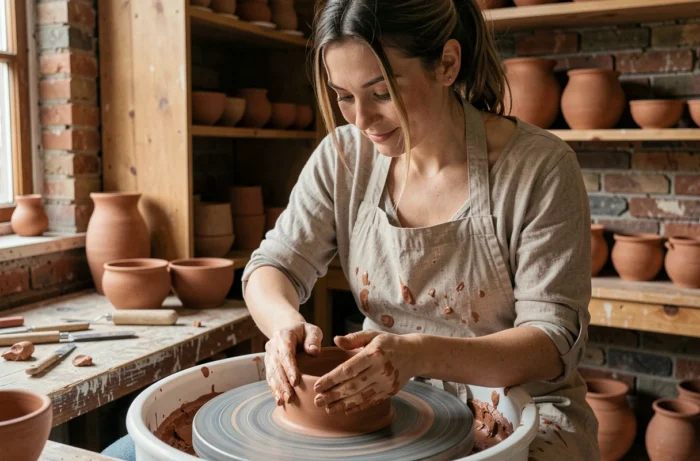
This is not just a simple return to Sunday pottery. The trend is reaching audiences who have never attended a painting or jewelry-making workshop. Urban workshops for ceramics, bookbinding, or sewing are showing waiting lists, and short formats (two to three hours) dominate over longer courses.
Several factors explain this orientation. The entry cost remains low for most manual activities. The result is immediate, creating a contrast with digital hobbies where gratification remains abstract. For those following leisure on Atom News, this shift towards the concrete has been documented for several months through a variety of formats.
Field feedback diverges on one point: the duration of commitment. Some participants drop out after a few sessions due to a perceived lack of progress. Others settle into a regular practice. Retention largely depends on the format offered by the workshop, not just on the activity itself.
Social Run Clubs and Collective Leisure: Sociability as a Driving Force
Le Monde reported in September 2026 that the number of run clubs on Strava in France increased by 5.2 times in 2025 compared to the previous year. The phenomenon goes beyond running. It reflects a broader shift towards leisure activities where social connection takes precedence over individual performance.
These clubs often operate without federal affiliation. A weekly outing, a fixed meeting place, sometimes a drink after the effort. The model attracts an adult audience that does not find its place in traditional associative structures.
What Distinguishes These Formats from Traditional Sports Clubs
- No annual registration or mandatory license in most cases, lowering the entry barrier
- Flexible time slots, often in the evening or weekend mornings, adapted to professional constraints
- A focus on the social aspect (shared meals, discussions) as much as on physical effort
The limitation of this model lies in supervision. For informal run clubs using public space, the legal framework remains unclear. The law of August 18, 2026, on the safety of sporting events expands the responsibility of organizers, including for non-competitive formats.
Local Micro-Adventures: Outdoor Activities on a Budget
Another trend is emerging around the rediscovery of local territories. Recent content describes a shift in demand towards short getaways, with little equipment and a reduced budget. Urban hiking, lightweight camping, exploration of nearby natural sites: micro-adventure relies on voluntary constraints rather than the accumulation of gear.
This format is appealing because it requires neither complex reservations nor long travel. However, the regulatory framework is tightening on certain points. The French Alps, for example, are facing increasing restrictions on wild camping.
Regulatory Constraints to Know Before Setting Off
Helmets are becoming mandatory for electric scooters, and discussions on extending this requirement to bicycles are advancing on the government side. For anyone incorporating soft mobility into their outdoor leisure activities, these developments change the necessary preparation.
Supervised outdoor activities are also affected by the extension of liability provided for by the law of August 18, 2026. Organizers of collective outings (via naturism, via ferrata, guided hiking) must now verify stricter safety obligations.
Games, Escape Rooms, and Indoor Leisure: A Growing Market
Board games for adults, escape rooms, and immersive formats (murder parties, team investigation games) are capturing an increasing share of demand in 2026.
The escape room remains the most sought-after format for group outings, whether among friends, family, or in a professional setting (team building). The creativity of the scenarios is advancing, with increasingly elaborate themes and hybrid mechanics combining augmented reality and physical puzzles.
The available data does not allow for conclusions about the long-term profitability of these structures, whose customer renewal rate varies significantly by city. Paris concentrates a dense offer, but medium-sized cities are also seeing independent rooms emerge.
The choice of a leisure activity in 2026 depends less on a list of ideas than on a trade-off between format (collective or solo), commitment (occasional or regular), and setting (indoor, outdoor, supervised or free). The trends documented this year all point in the same direction: more concrete, more local, and more social practices than the previous decade.