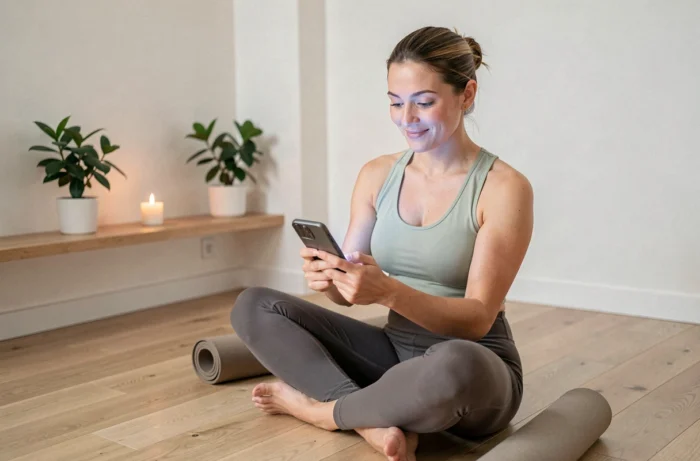
Are you looking for the schedule of a vinyasa class, wanting to know if there’s a spot available for the evening session, or simply asking a question about the rates? The studio is closed, and no one is picking up. Contacting a yoga studio online should be as smooth as a sun salutation, but the points of contact are multiplying, and not all are equal.
Google Business Profile: the first reflex before even visiting the studio’s website
When you type the name of a yoga studio into Google, the profile that appears on the right side of the screen (or at the top on mobile) is more than just a business card. The Google Business profile can integrate a booking button and direct messaging. You can then move from searching to contacting without opening the website.
For this to work, the studio must enter the URL of its schedule or booking page in the designated field, rather than that of the homepage. Many studios forget this setting. The result: the prospect clicks, lands on a generic page, and abandons.
If you spot a studio whose Google profile directly offers messaging, use it. Responses are often quicker than a traditional email because the notification goes to the manager’s phone. For example, several studios in France already direct their visitors to the contact page of Ananas Et Asanas from their profile, reducing the number of clicks between the search and the request.

WhatsApp and messaging: contacting a yoga studio without creating an account
Have you noticed that an increasing number of studios display a WhatsApp number on their website or social media? This conversational channel appeals to organizations that do not want to impose the download of a dedicated booking app.
The process is simple: you send a message to ask about schedules, rates, or a spot in a class. The studio confirms via return message, sometimes with a payment link. No account to create, no password to remember.
This model is particularly suitable for smaller studios that do not have permanent secretarial staff. The conversation stays on your phone: you can easily find the confirmation, address, or shared schedule.
When to prefer WhatsApp over a contact form
- You have a specific question that requires a quick exchange (available spot, required level, equipment to bring)
- You want to book a class live remotely, and the studio does not have an automated online booking system
- You want to confirm a last-minute changed schedule, for example, a class moved due to a holiday
On the other hand, for a first formal contact (request for a quote for a private class, partnership), an email or a contact form on the website remains more appropriate.
Online booking with real-time availability: avoiding unnecessary back-and-forth
The real barrier to contacting a studio is not the absence of a form. It’s the wait for a response. You write to find out if there’s a spot available on Tuesday at 7 PM, and the confirmation arrives Wednesday morning, after the class has already passed.
A synchronized booking calendar that displays remaining spots eliminates this problem. You can see at a glance which time slots are available, both in-person and online. You book, you receive a confirmation, and that’s it.
Recent booking solutions offer this synchronization for in-person classes and online sessions. The schedule updates as soon as a practitioner cancels or a new slot opens. For the studio, this significantly reduces the volume of messages to be handled manually.
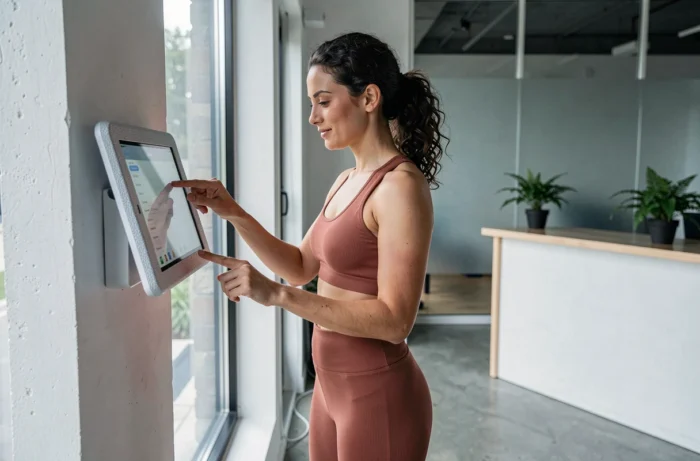
What a good booking system should display
- The number of remaining spots per session, updated in real-time
- The type of class (hatha, yin, vinyasa) and the expected level
- The name of the instructor leading the session
- The option to join the class online if the studio offers live videos
Make sure the booking link is accessible in no more than two clicks from the homepage. If you have to navigate through three menus to find the schedule, it’s a sign that the studio has not optimized its contact journey.
Social media and email: two complementary channels for follow-up
Instagram and Facebook remain showcases for yoga studios. Stories show the atmosphere, posts announce workshops. Sending a private message on Instagram to ask for information works, but the response depends on the instructor’s responsiveness, who may not always have notifications turned on between classes.
Email remains the most reliable channel for requests that require written follow-up. Registration for a workshop, refund request, question about a subscription: anything that involves a record deserves an email.
A well-organized studio centralizes its channels: the Google profile links to the contact form, the Instagram profile displays the booking link in bio, and the email appears on every page of the website. If you can’t find a studio’s email address in less than ten seconds on its site, it’s often because they prefer to direct exchanges to another channel (instant messaging or booking platform).
Choosing the right channel based on your need
For a quick question about schedules, Google messaging or WhatsApp is sufficient. To book, the online system with real-time availability avoids unnecessary exchanges. For a complaint or contractual exchange, email protects both parties.
The best online studio is not the one that multiplies channels, but the one that responds quickly on each of them. Before signing up, test it: send a message via the proposed channel and measure the response time. A studio that takes more than 24 hours to respond to a simple question is likely to manage its cancellations and schedule changes with the same delay.