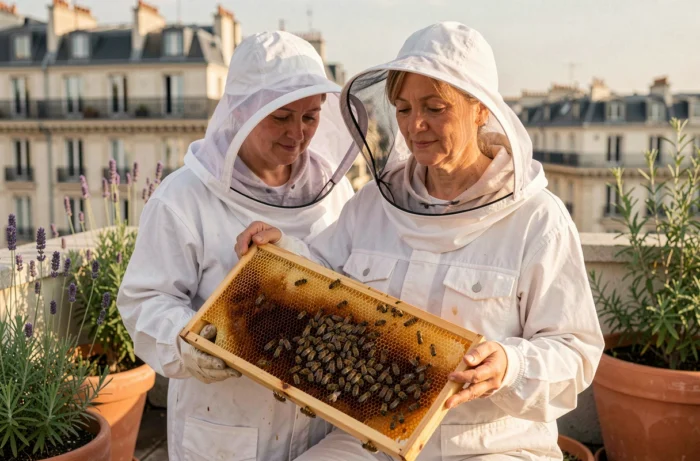
Urban beekeeping is generating increasing interest in France, but field data tells a more nuanced story than the usual promotional discourse. With yields plummeting due to the climate, pressure from the Asian hornet, and sometimes overlooked regulatory obligations, what measurable results can we expect from a hive installed in the city?
Urban Yields and Climate Hazards: What the Numbers Show
Honey harvests in urban areas vary significantly from year to year. In Bourg-en-Bresse, the sixteen municipal colonies produced 300 kg of honey in 2026, compared to 620 kg the previous year. The municipal beekeeper attributes this decline to spring rains followed by a summer heatwave.
This case illustrates a reality that beginner guides rarely address: heat episodes directly reduce harvests and disrupt colony functioning. Bees spend their energy ventilating the hive rather than foraging, and urban flowering periods shorten.
| Indicator | Bourg-en-Bresse 2025 | Bourg-en-Bresse 2026 |
|---|---|---|
| Total Production (16 colonies) | 620 kg | 300 kg |
| Identified Limiting Factors | Asian hornet (autumn) | Spring rains, heatwave, weakened colonies |
The decline is not solely explained by the weather of the current year. The pressure from the Asian hornet at the end of summer and autumn 2025 left fewer and weaker colonies for wintering, delaying the spring restart. The effect is cumulative: a bad season can compromise the next one.
Specialized resources like hommesetabeilles.fr document these interactions between parasitic pressure and climate that weigh on the management of urban hives.
Annual Hive Declaration: An Obligation from the First Colony
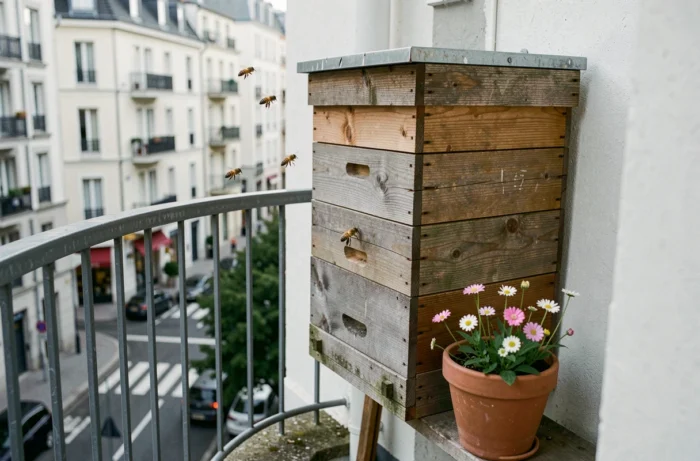
Installing a hive on a rooftop or in a shared garden does not exempt one from administrative formalities. The declaration of hives remains mandatory from the first colony, every year between September 1 and December 31. In 2026, several local authorities and beekeeping organizations reminded of this rule, notably the GDSA of Puy-de-Dôme in its communication on September 4, 2026.
This declaration serves for the health monitoring of the French bee population and risk management, particularly the monitoring of the Aethina tumida beetle. Many beginner urban beekeepers are unaware of or neglect this, which skews national data and complicates the work of veterinary services.
Points of Vigilance for Urban Beekeepers
- The declaration is done online via the MesDémarches portal or by Cerfa form. It concerns anyone owning at least one hive, even for leisure purposes.
- A beekeeper number (NAPI) is assigned upon the first declaration. It must be displayed on a visible panel near the apiary.
- In case of non-declaration, the beekeeper faces difficulties during health inspections and cannot benefit from assistance in case of reported mortality.
Asian Hornet in the City: A Parameter That Changes Apiary Management
The Asian hornet is no longer limited to rural areas in the southwest. Its presence in urban environments profoundly alters the management of an apiary. The experience from Bourg-en-Bresse shows that the pressure from the hornet in autumn weakens colonies for the following winter.
In the city, hornet nests settle in park trees, under roofs, and in hedges. Their proximity to hives creates constant stress: bees stop going out, nectar intakes decrease, and the queen reduces her laying. The problem goes beyond simple predation in flight.
For an urban beekeeper, spring trapping of founders and monitoring the surroundings of the apiary become as routine as the spring visit. The time and material costs are not negligible for an amateur managing one or two hives on a balcony.
Urban Pollination and Biodiversity: Measuring the Real Contribution of Hives in the City
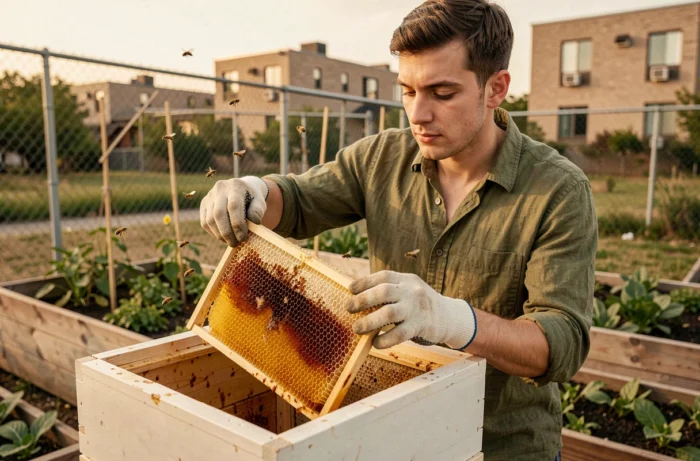
The ecological argument remains the primary driver of urban beekeeping. Honey bees pollinate a large majority of flowering plants, and urban green spaces provide a flowering period spread over several months due to the diversity of planted species.
However, the question of competition with wild pollinators deserves consideration. A too-high density of hives in the same neighborhood can reduce the resources available for bumblebees, osmiine bees, and other solitary bees, raising questions about the actual nectar capacity of the most densely populated areas with colonies.
Conditions for a Positive Ecological Contribution
- Limit the number of hives per site based on the floral resources available within a three-kilometer radius.
- Favor the planting of bee-friendly hedges and flowering meadows rather than adding additional colonies.
- Associate the installation of hives with a program to monitor wild pollinators to verify the absence of competition.
- Participate in citizen science initiatives to contribute data on the health of pollinators in urban environments.
Urban beekeeping produces concrete, measurable results, but it is vulnerable. The data from Bourg-en-Bresse reminds us that the yield of an urban apiary depends as much on the hornet and the climate as on the beekeeper’s know-how. Declaring hives, monitoring the Asian hornet, and adapting colony density to local resources: these three parameters determine whether an apiary installation in the city truly contributes to biodiversity or adds additional pressure to an already fragile ecosystem.