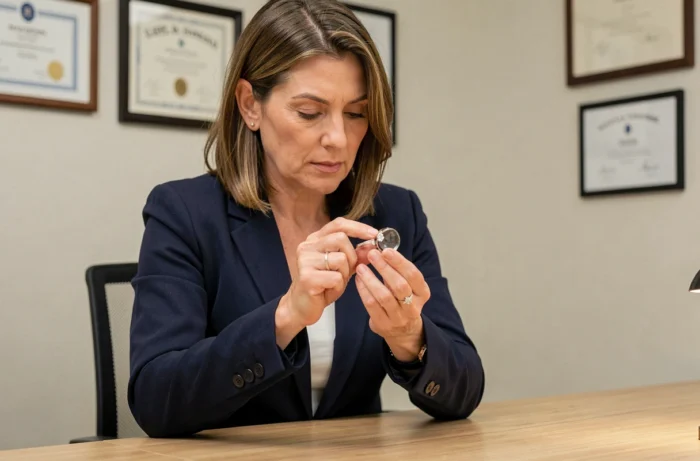
The diamond resale market is becoming more complicated. Anti-money laundering regulations are tightening in France and Europe, professionals in the buyback sector are narrowing their margins to cover compliance costs, and individuals are often faced with disappointing offers compared to the estimated value of their stone. Understanding this context allows for approaching the sale with realistic expectations and an appropriate strategy.
Anti-money laundering regulations and their impact on diamond buyback prices
Professional buyers of gemstones are subject to anti-money laundering and counter-terrorism financing (AML-CFT) obligations. This means TRACFIN checks, systematic identity verification, and enhanced documentation for each transaction.
These formalities come at a cost. Serious professionals pass these charges onto their purchase offers, which mechanically reduces the margin offered to individuals, especially on valuable pieces. Profiles perceived as atypical (frequent sales, large inheritances without clear documentation) are offered even more cautious prices, or may face transaction refusals.
The European regulation (EU) 2024/1624 adds an additional layer. It explicitly classifies jewelry and jewelry works priced over 10,000 euros as “high-value goods.” Starting July 10, 2027, harmonized rules will apply across the European Union. Anticipating these changes also means understanding why some buyers are becoming increasingly demanding regarding traceability.
Seeking to sell diamond jewelry at the best price therefore requires preparing a complete file even before contacting a professional: gemological certificate, original purchase invoice, proof of ownership in case of inheritance.
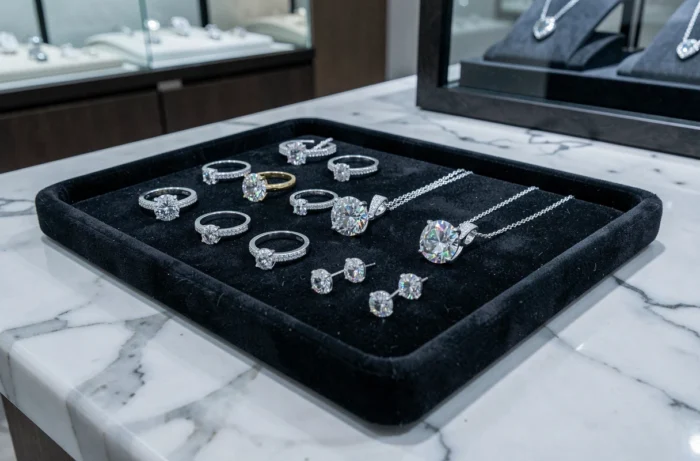
Discrepancy between insurance value and resale price of a diamond
The most common confusion among individual sellers concerns the difference between the value stated on an insurance certificate and the actual resale price. These two amounts have almost nothing in common.
The insurance value corresponds to the cost of replacing the jewelry new at a retailer. It includes the jeweler’s margin, setting fees, VAT, and sometimes a markup related to the brand. The resale price, on the other hand, reflects what a professional buyer is willing to pay for a second-hand item, in a market where the supply of diamonds far exceeds the demand for buybacks.
An insured piece of jewelry for a high amount can be resold for a fraction of that sum. Disappointment is common, but it results from a simple market mechanism: the professional buys to resell and must factor in their own costs (expertise, potential refurbishment, regulatory compliance, commercial margin).
How to reduce this gap
A certificate from a recognized gemological laboratory remains the most direct lever. A report detailing the characteristics of the stone (carat weight, color, clarity, cut quality) provides the buyer with an objective basis for formulating their offer. Without this document, the evaluation relies on the professional’s visual examination, which will naturally be more conservative in their estimate.
The condition of the jewelry also matters. A professional cleaning before the sale does not change the intrinsic quality of the stone, but a clean and well-presented piece inspires more confidence and facilitates the appraisal.
Comparing diamond jewelry sales channels in France
Not all sales channels are equal, and the choice depends on the value of the piece, the desired timeframe, and the level of risk accepted.
- Direct buyback by a professional (jeweler, diamond dealer, specialized house) offers a quick and secure transaction, but the price offered will be the lowest as it incorporates all intermediary margins and compliance costs.
- Auction sales are suitable for signed pieces or antique collectible jewelry. The selling fees are significant (buyer and seller commissions), but the bidding process can push the price beyond an initial estimate.
- Private sales (online platforms, classified ads) theoretically allow for a better price by eliminating the intermediary, but expose sellers to risks: lack of guarantee for the buyer, attempts at fraud, difficulty in proving the authenticity of the stone.
- Consignment with a professional constitutes a compromise: the jewelry remains displayed in the store until a buyer is found, with a commission deducted upon sale. The timeframe can be long and the outcome uncertain.
For pieces of moderate value, direct buyback often remains the most pragmatic choice. For rare jewelry or pieces signed by major houses, auction sales may justify the wait and associated costs.
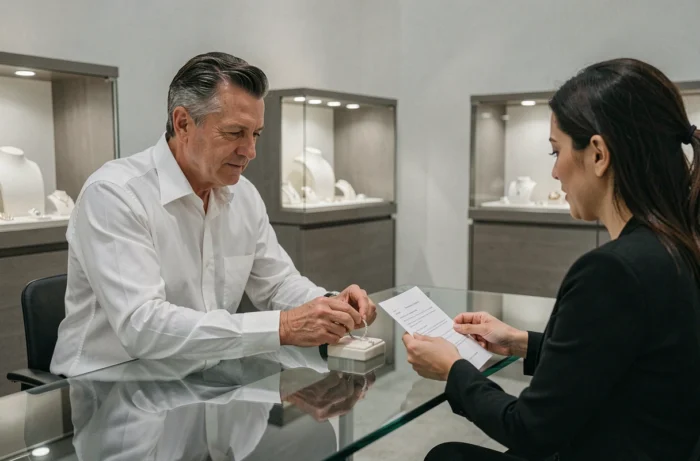
Pitfalls to avoid when selling diamonds
The first pitfall is relying on a single estimate. Buyback offers vary greatly from one professional to another, sometimes ranging from half to double for the same stone. Seeking at least three opinions helps to establish a realistic range.
The second concerns “urgent” buybacks. Some buyers exploit the need for quick cash to offer prices well below market value. Selling in haste almost always costs more.
Lab-grown diamonds vs. natural diamonds
Buyback professionals strictly distinguish between the two categories. Synthetic diamonds, whose production costs are steadily decreasing, have a resale value significantly lower than that of natural diamonds. Some buyers outright refuse lab-grown stones. Verifying the nature of your stone before any steps avoids considerable time loss.
Lastly, a often overlooked point: taxation. In France, the sale of jewelry and precious stones may be subject to a flat tax on valuable items or to capital gains tax, depending on the amount and duration of ownership. Inquiring about the applicable tax regime before the sale allows for incorporating this parameter into the calculation of the net price actually received.
The diamond buyback market is neither opaque nor hostile, but it operates according to rules that individuals rarely know. Documenting your stone, comparing offers, and understanding the regulatory constraints of professional buyers: these three steps directly condition the final amount obtained.