The frying of joels in an air fryer is based on a simple principle: replicating the crispiness of classic frying by replacing the oil bath with a high-speed circulation of hot air. The result depends less on the device itself than on the preparation of the fish before cooking, particularly the type of coating used.
Dry coating or liquid batter: the choice that determines crispiness
The first common mistake is to dip the joels in a classic liquid frying batter, as one would do for an oil fryer. In an air fryer, a wet batter reacts poorly to the hot air circulation: it does not set instantly upon contact with a fat bath, and the result is often a soft, uneven crust that sticks to the basket.
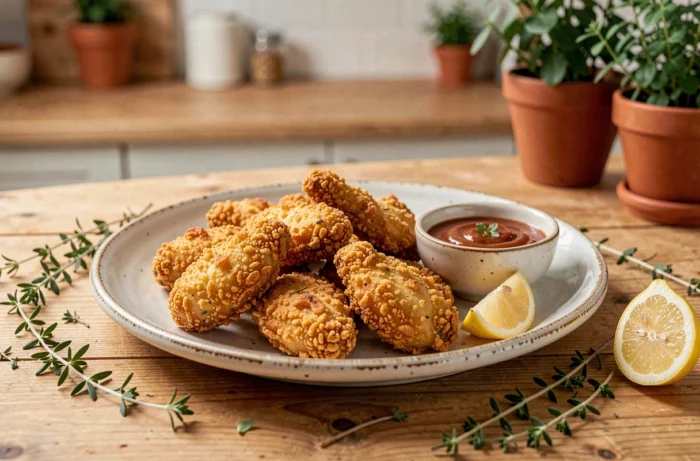
The solution involves a dry coating in three steps. First, coat the joels in flour, then in beaten egg, and finally in fine breadcrumbs or panko. Panko, with its airier flakes, captures heat better and browns evenly. A light spray of oil on the coating before cooking is enough to trigger the Maillard reaction that gives that golden color.
For those looking for a detailed recipe for frying joels in an air fryer with exact proportions, the principle remains the same: the dry coating is the key to a coating that holds during cooking.
Temperature and preheating of the air fryer for fish
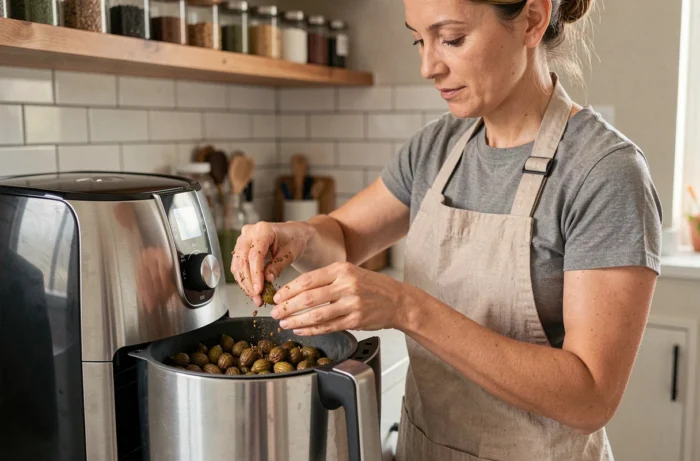
Preheating the air fryer is a factor often overlooked. Placing breaded fish in a cold basket extends the cooking time and allows moisture to soften the coating. A preheated basket sears the surface of the fish within the first few seconds, preventing the joels from “sweating” and losing their texture.
Three to five minutes of preheating is sufficient in most models. The cooking temperature typically ranges between 180 and 200 °C. Since joels are small fish, their cooking time remains short: monitoring the browning rather than relying on a fixed timer yields better results.
Internal temperature reference for food safety
Recent recommendations emphasize a threshold of 63 °C internal temperature to consider a fish fillet safely cooked. For small pieces like joels, this threshold is reached quickly. A fine-probe kitchen thermometer allows for checking without repeatedly opening the basket.
Arrangement in the basket and batch management
The air fryer cooks by convection. If the joels overlap in the basket, the air cannot circulate properly, and some pieces remain soft while others burn. Arranging the fish in a single layer without contact between them is the basic rule.
On a standard basket, this often means cooking in two or three batches. The temptation to stack everything to save time consistently produces uneven results. Between each batch, allowing the air fryer to regain temperature for a minute improves consistency.
- Space each piece at least one centimeter apart to allow air to circulate over the entire surface of the coating.
- Turn the joels halfway through cooking to brown both sides evenly, especially if the model does not have a rotation system.
- Use perforated parchment paper at the bottom of the basket to prevent the coating from sticking to the grids without blocking the airflow.
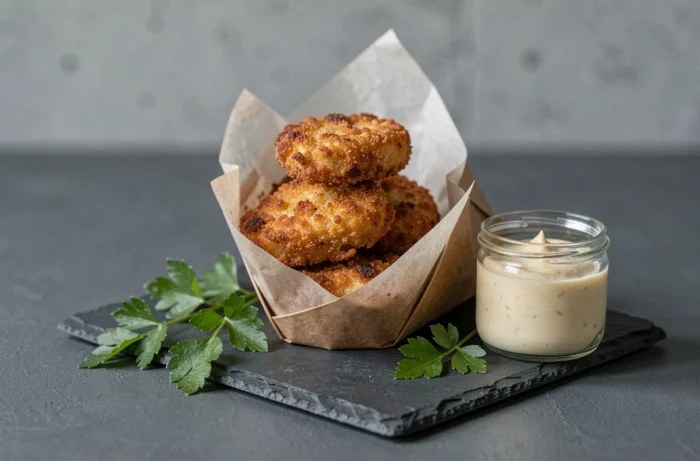
Seasoning and coating variations for frying joels
Classic breadcrumbs work, but they are not the only option. Japanese panko gives a lighter and crispier result. Fine cornmeal, mixed with smoked paprika or cumin, provides a different grainy texture that more closely resembles frying from the south of France.
Seasoning is done at two levels. First in the flour (salt, pepper, dry spices), then directly in the breadcrumbs. Adding finely grated parmesan to the panko creates a crust that browns faster due to the fats in the cheese.
- Plain panko with a spray of olive oil: the most neutral result, which keeps the fish flavor in the foreground.
- Breadcrumbs with parmesan and herbs de Provence: a flavorful crust that stands on its own without sauce.
- Cornmeal and paprika: a denser texture, ideal with a lemon wedge or tartar sauce.
Amount of oil actually needed
One to two sprays of oil per batch are sufficient to achieve satisfactory browning. Some users do not use any at all, but the result remains paler and the coating tends to detach. Peanut or sunflower oil, with their high smoke points, are better suited than extra virgin olive oil, which can smoke at high temperatures.
Common mistakes that ruin the texture of joels in the air fryer
Opening the basket every two minutes to check the cooking drops the temperature and prolongs the process. A single opening halfway through cooking to turn the pieces is sufficient.
Another pitfall: seasoning the joels with salt too long before cooking. Salt draws moisture to the surface, which dampens the coating even before the fish enters the device. Season at the time of coating in the flour, not an hour before.
Finally, not overcrowding the basket remains the most repeated advice in user feedback, and the most ignored. Patience between batches makes the difference between crispy joels and a soft result that has nothing to do with successful frying.
The last point to keep in mind: each model of air fryer heats differently. Adjusting the temperature and cooking time after a first test batch, rather than blindly following a generic recipe, remains the most reliable method for achieving consistent results.