The clitoral piercing usually refers to a piercing of the clitoral hood, either vertical (VCH) or horizontal (HCH). Direct piercing of the clitoral glans is rare and reserved for specific anatomies, with sufficiently developed tissue to support the jewelry without nerve compression. Confusing the two can lead to unrealistic expectations and increased risks.
Regulatory obligations of the studio for intimate piercing in France
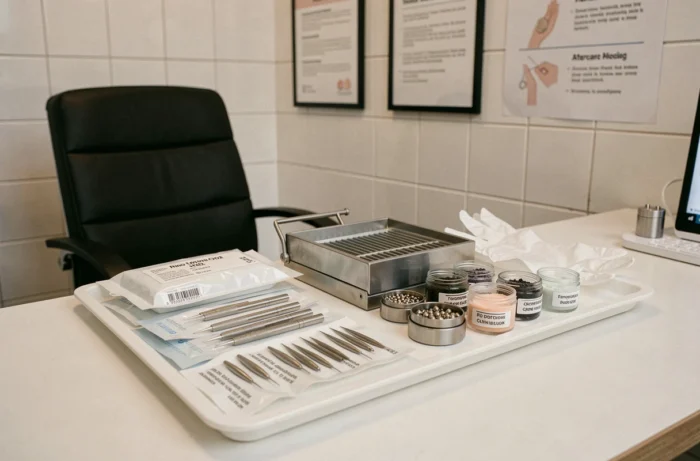
A piercer who agrees to perform a genital piercing must meet specific conditions that we recommend verifying before making an appointment. The decree 2008-149 governing skin piercing has been updated in 2023, reaffirming the need for a declaration to the ARS and adherence to strict hygiene and health regulations.
The decree of March 5, 2024, additionally requires a specific hygiene and health training for professionals performing piercing procedures (excluding ear-piercing guns), which explicitly includes genital piercings. A studio unable to present its training certificate and ARS declaration receipt should not be considered.
Regarding minors, the Public Health Code requires written consent from the holder of parental authority, kept for three years. In practice, nearly all professional piercers systematically refuse any intimate piercing on minors, even with parental consent. This refusal goes beyond legal requirements and is part of an ethical standard shared by the profession. You can learn everything about clitoral hood piercing on Mes Conseils Beauté to complement this regulatory and anatomical overview.
Anatomical assessment before clitoral hood piercing
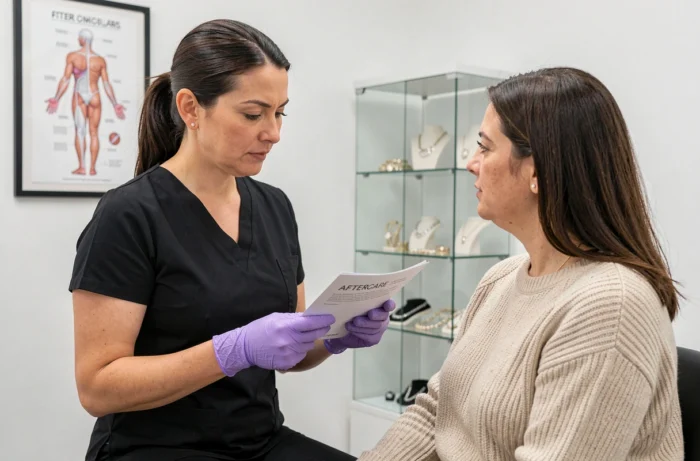
The choice between a VCH and an HCH is not based on aesthetic preference. It depends on the morphology of the hood. A skilled piercer performs a Q-tip test to determine if the hood has enough mobile tissue and depth to accommodate a vertical piece of jewelry without pressure on the glans.
If the Q-tip slides under the hood and comes out on the pubic side, the VCH is feasible. If the tissue is too thin or too adherent, the piercer will suggest an HCH or advise against piercing. This test is quick, painless, and the only reliable method to anticipate the viability of the piercing.
Direct piercing of the clitoral glans
We mention it for transparency, but piercing the clitoral glans itself is rare and high-risk. It requires a sufficiently protruding glans and a piercer with documented experience in this specific type of piercing. The nerve density of the glans makes any placement error potentially irreversible in terms of sensitivity.
Choice of jewelry and materials for genital piercing
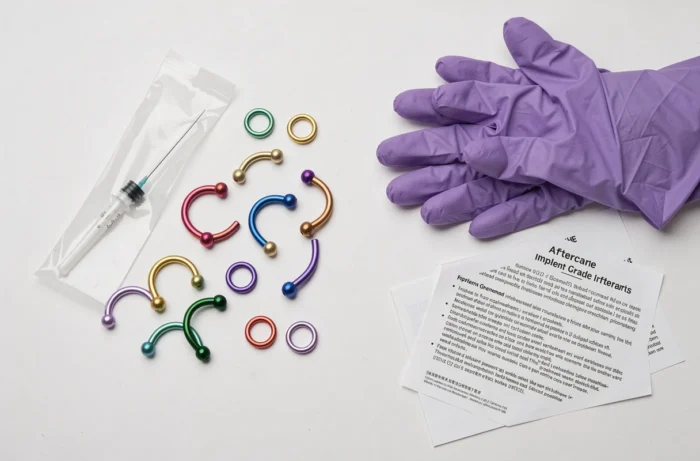
The initial jewelry directly affects the quality of healing. For a VCH, the curved bar (banana) made of implant-grade titanium (ASTM F136) is the standard. Surgical steel 316L is still tolerated but carries a risk of nickel reaction in sensitive individuals.
- ASTM F136 titanium is the reference material for mucous membranes and intimate areas, anodizable without the addition of a surface coating
- Niobium is a hypoallergenic alternative, rarer in studios but perfectly suited for genital piercings
- Solid 14 or 18-carat gold (not plated) is suitable after complete healing, never as initial jewelry
- Materials to avoid for the first piercing: non-certified nickel steel, variable quality bioplast, sterling silver that oxidizes in a humid environment
The diameter and length of the bar are adjusted during the consultation. A jewelry piece that is too short compresses the tissue and causes irritation. A piece that is too long catches on underwear and delays healing.
Healing and care of a clitoral hood piercing
The healing time for a VCH or HCH piercing averages four to eight weeks, making it one of the fastest healing piercings. The significant vascularization of the genital area accelerates the process, provided it is not disturbed.
The care protocol is based on two simple actions:
- Daily cleaning with sterile saline solution, without alcoholic disinfectants or betadine that dry out the mucosa
- Systematic hand washing before any handling of the jewelry
- Using a mild intimate hygiene soap during showers, avoiding harsh scented or antibacterial gels
During the healing phase, sexual intercourse is not prohibited but requires protection with a condom to limit friction and the risk of bacterial infection. Direct contact with bodily fluids on an unhealed piercing significantly increases the risk of complications.
Warning signs to watch for
A slight swelling and clear discharge during the first few days are normal. However, increasing pain after the first week, colored or foul-smelling discharge, or redness extending beyond the piercing site warrant prompt medical consultation. Jewelry rejection, recognizable by visible thinning of the tissue between the two openings, requires removal to avoid a permanent scar.
Sensory impact of the VCH piercing on sexuality
The VCH positions the lower ball of the jewelry in direct contact with the clitoral glans. This light and constant pressure alters sensations both at rest and during intercourse. The effect varies according to individual morphology and sensitivity: some people describe increased stimulation, while others feel a sense of presence without a notable change in pleasure.
The HCH, positioned horizontally above the glans, offers a more aesthetic than functional result. Its impact on direct stimulation remains limited compared to the VCH. This parameter deserves to be openly discussed with the piercer during the initial consultation to align expectations with the likely outcome.
A well-placed genital piercing, with suitable jewelry and complete healing, should not cause chronic discomfort or loss of sensitivity. If pain persists beyond two months or if the area becomes less sensitive than before the piercing, the placement of the jewelry should be reevaluated by an experienced professional.