The French automotive market is undergoing a rapid restructuring phase. Accelerated electrification, the emergence of Chinese brands in the top registrations, and the collapse of the residual value of used electric vehicles: the automotive trends of 2026 are not just a list of new models. What depreciation gaps really separate electric from thermal vehicles, and what do these figures mean for purchasing a vehicle this year?
Electric vs. Thermal Depreciation: The Numerical Gaps Over Five Years
The most structuring data for the automotive market in 2026 concerns the loss of value of used electric cars. Several converging analyses (AAA Data, Leboncoin, L’Argus, Frandroid) paint an unambiguous picture.
| Powertrain | Average Depreciation at 5 Years | Used Market Dynamics |
|---|---|---|
| Electric | around 59 % | +30 % transactions in 2025 |
| Gasoline / Diesel | around 44 % | Stable or slightly declining |
The gap exceeds 15 percentage points of depreciation between the two categories. For a model purchased new at around 35,000 euros, this represents several thousand euros of difference at resale.
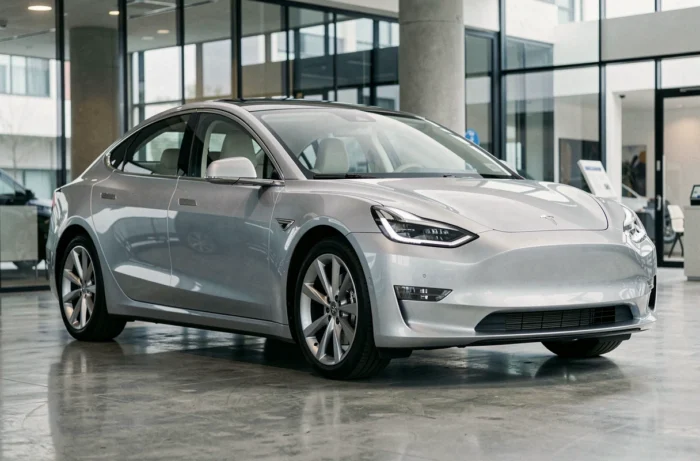
Some models illustrate this trend markedly. The Renault Zoé shows a depreciation that can reach 65 % according to BFMTV. Teslas are appearing on the used market starting at 23,000 euros, and Dacia Springs are dropping below 8,500 euros.
To keep track of these developments over the weeks, the news on Passion Auto Méca regularly detail price movements and launches that are reshaping the French automotive landscape.

Used Electric Vehicles: A Rapidly Growing Market Despite a Stagnant Context
The overall volume of used cars is stagnating or declining in France. In contrast, the used electric segment is progressing against the trend. In 2025, nearly 178,000 used electric cars changed owners, representing an increase of about 30 % year-on-year, according to AAA Data.
This figure remains modest compared to all transactions: electric vehicles account for only about 3 % of the used market. However, the dynamics are clear.
Why This Acceleration
The massive depreciation described above acts as a lever for access. Households that could not afford a new electric vehicle are now finding models at prices comparable to those of a used thermal city car.
- The Renault Zoé, the star of the used electric market, is being sold at prices significantly lower than its original catalog price, making it accessible to a much wider audience.
- The Peugeot e-208 and Nissan Leaf follow the same trajectory, with stocks rotating faster among professionals.
- Used Tesla Model 3s attract buyers targeting range and charging network, at an entry cost significantly lower than new.
The used electric market is becoming the main vector for democratizing zero-emission mobility in France, more so than incentives for buying new.
Chinese Brands in France: Rising Registrations, Questionable Confidence
MG, BYD, Xpeng, Jaecoo: these manufacturers are now regularly appearing in the top of monthly French registrations, alongside brands like Opel, Hyundai, or Citroën. Geely is preparing to enter the market.
This rapid progression raises concrete questions about long-term reliability, the density of the after-sales network, and warranty conditions. Feedback remains limited due to the short time frame.
What the Available Data Shows
Chinese electric SUVs are positioned in segments where European manufacturers have significantly higher prices. The equipment-price ratio is their main selling point.
The 2026 ecological penalty (CO2 and weight scale) penalizes heavier thermal SUVs more, which mechanically advantages Chinese electric models from a fiscal standpoint. The penalty grids enhance the price appeal of these vehicles for buyers sensitive to the total cost of ownership.

Hybrid Range and New Platforms: What’s Changing at Volkswagen, Renault, and Mercedes
European manufacturers are restructuring their offerings around two axes: reducing the number of models and migrating to shared platforms (electric or hybrid).
Volkswagen announces its intention to maintain sales volumes while reducing its workforce and the number of models in its catalog. This rationalization aims to concentrate investments on electric SUVs and high-margin plug-in hybrids.
Mercedes is preparing a fifth generation of the A-Class, initially condemned in favor of more profitable vehicles. The compact will adopt the MMA platform and will be available in micro-hybrid or 100 % electric versions, with an 800 V architecture allowing ultra-fast charging.
Renault is capitalizing on the success of the Zoé in the used market to boost the visibility of its new electric range. The strategy is to use the visibility of the secondary market as a springboard to new models.
Car Insurance and Connected Vehicles
The massive arrival of connected models (sensors, onboard telematics, remote updates) is also changing the car insurance sector. Insurers are adapting their pricing grids based on driving data transmitted by the vehicle, creating new pricing criteria linked to actual usage rather than just the driver’s profile.
The automotive market of 2026 can be understood through a dual movement: the depreciation of used electric vehicles opens access to new buyers, while European and Chinese manufacturers compete for the SUV and compact segments with radically different pricing and platform strategies. The key figure to remember is this: 59 % average depreciation over five years for electric vehicles, a level that transforms the very structure of the used market in France.