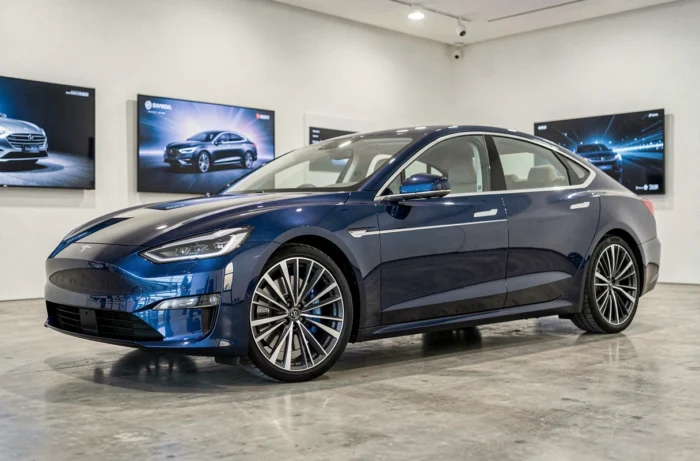
The automotive market is evolving at an accelerated pace. Beneath the bodywork, it is the software, batteries, and sensors that dictate the changes. Manufacturers are no longer just improving an engine or redesigning a dashboard: they are rethinking how a vehicle operates, updates, and interacts with its environment. Here are the automotive trends that are fundamentally changing the driving experience.
Software-defined vehicle: when the vehicle evolves after purchase
You may have noticed that your phone receives updates that add features or fix bugs? The same principle now applies to cars. We are talking about a software-defined vehicle, or SDV (Software Defined Vehicle).
Specifically, this means that a manufacturer can modify your car’s behavior remotely, via an OTA (Over-The-Air) update. Adjusting the accelerator response, improving battery efficiency, activating a driving assistance feature that didn’t exist at delivery: it all goes through the network.
This model is also changing the economics of the automotive industry. Manufacturers are no longer just selling a physical object. They are offering subscriptions to embedded services, paid feature packs, and even software power upgrades. The value of a car is as much in its code as it is under the hood.
To keep up with these developments over the months, the latest auto news on Affaires du Jour regularly covers manufacturers’ announcements in this area.
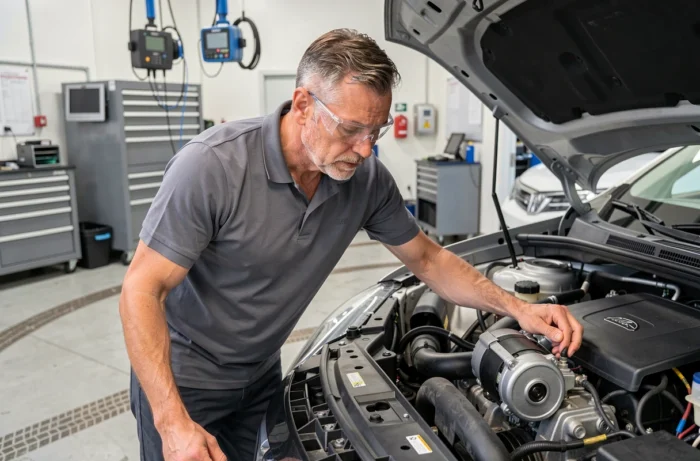
Safety standard for autonomous vehicles: what China mandates starting in 2027
Autonomous driving has generated a lot of ink, but regulation remains the decisive factor. It determines whether a robotaxi or a level 3 vehicle can actually operate.
In China, a mandatory standard called GB 44721-2026 was approved on July 30, 2026. It governs autonomous vehicles at levels L3 and L4 with specific requirements.
- The backup driver must be able to manually deactivate the autonomous system at any time.
- The vehicle must continuously monitor the alertness of this backup driver.
- The buyer must be clearly informed of the system’s limitations before purchase.
- Testing methods cover lifecycle management and human-machine interactions.
The Chinese Ministry of Industry has also announced complementary safety rules, with an effective date set for July 1, 2027. According to the Chinese economic press, this approach marks the transition from a “marketing race” to a competition focused on safety validation.
Europe lagging behind on robotaxis
On the European side, the contrast is striking. No commercial robotaxi service is yet in operation on the continent. Europe remains far behind China and the United States in deploying these autonomous fleets.
This gap does not reflect a lack of technology, but rather a regulatory caution that hinders actual deployments. European manufacturers are developing advanced driver assistance systems, but cannot test them as freely as their Chinese or American competitors.
Batteries and materials: the real levers of electric vehicle pricing
Why does the price of an electric car remain high? The answer is one word: the battery. It accounts for a major portion of the total vehicle cost, and its price depends on raw materials whose supply is becoming more complicated.
The European Union has strengthened its framework around critical raw materials (lithium, cobalt, nickel). The digital battery passport, currently being rolled out, requires manufacturers to provide complete traceability: origin of materials, carbon footprint of manufacturing, recycling capacity. Each battery must display its complete environmental balance.
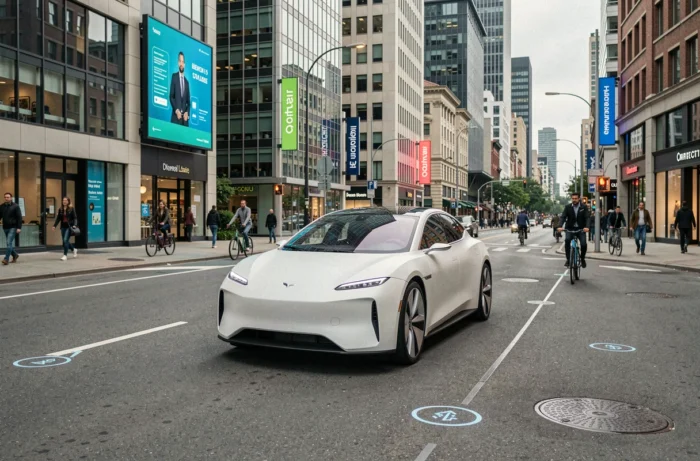
Pressure on production costs
Manufacturers betting on a rapid decrease in cell prices may be disappointed. Global demand for lithium is rising, traceability standards add administrative costs, and Chinese competition in LFP (lithium iron phosphate) batteries is reshuffling the cards.
For consumers, this translates into a choice: wait for a hypothetical price drop, or take advantage of purchase aids while they exist. The most accessible electric vehicles today often use less expensive battery chemistries, at the cost of slightly reduced range.
After-sales services and connected mobility: a market in full transformation
After-sales automotive services are transforming under the influence of connectivity. A connected vehicle continuously transmits data about the condition of its components. The mechanic no longer waits for a breakdown: they receive an alert before it occurs.
This model of predictive maintenance reduces downtime and extends the lifespan of parts. For corporate fleets, this translates to direct savings in operating costs.
- Remote diagnostics before going to the workshop.
- Automatic ordering of spare parts based on vehicle data.
- Software update that fixes a malfunction without a visit.
Manufacturers are investing heavily in these mobility services, as they generate recurring revenue. Maintenance becomes a subscription, not a one-time event. This logic also applies to connected auto insurance, whose pricing adjusts to the actual behavior of the driver.
The automotive sector is not undergoing a simple technical evolution. It is changing its business model. The physical vehicle remains the starting point, but value is migrating towards software, data, and associated services. For buyers, understanding these mechanisms helps make more informed choices, whether regarding the type of powertrain, equipment level, or the brand that invests the most in the software tracking of its models.